

The Shift from Monero to Bitcoin on Darknet Markets
While Monero was once lauded as the currency of choice for its superior privacy features, a noticeable shift back towards Bitcoin is occurring within the ecosystem of darknet markets. This trend is driven by several factors, including Bitcoin’s improved accessibility and the perception that its established liquidity outweighs certain privacy drawbacks. Market administrators are adapting to this change, with platforms like Ares Market continuing to facilitate transactions, even as the debate over the ideal cryptocurrency for anonymous online commerce continues to evolve.
Declining Liquidity and Accessibility of Monero
The landscape of darknet markets is witnessing a notable shift, with a growing number of vendors and marketplaces moving away from Monero and explicitly demanding payment in Bitcoin. This trend marks a significant reversal from the previous years, where Monero was heavily promoted as the superior privacy coin. The change is not driven by a sudden improvement in Bitcoin’s privacy features but by more pragmatic concerns surrounding the liquidity and accessibility of Monero.
The core issue lies in the declining ease with which users can obtain Monero through non-custodial means. While Bitcoin can be purchased with relative ease on countless exchanges and peer-to-peer platforms globally, acquiring Monero has become increasingly difficult. Major centralized exchanges, often under regulatory pressure, have delisted the cryptocurrency, pushing users towards less convenient or more complex methods. This creates a significant barrier to entry, fragmenting the user base and reducing overall market liquidity.
For darknet market participants, this lack of liquidity translates directly into operational friction and heightened risk. A vendor receiving a large payment in Monero may struggle to convert it into fiat currency or another asset without using a custodial service that requires identity verification, effectively breaking the chain of anonymity. This practical hurdle undermines the very anonymity that Monero’s technology provides by its design. Consequently, many are reverting to Bitcoin, accepting its transparent ledger as a manageable risk that is offset by its unparalleled ease of use and deep, global liquidity pools.
Ultimately, the technological superiority of a privacy-focused cryptocurrency means little if the asset cannot be easily and anonymously acquired and liquidated. The current trajectory suggests that Bitcoin’s network effect and established infrastructure are proving to be more powerful forces on the darknet than the theoretical privacy guarantees of more specialized altcoins. The market is prioritizing broad accessibility over perfect cryptographic privacy, leading to a renaissance for Bitcoin as the darknet’s de facto currency.
Impact of Major Exchange Delistings
The landscape of darknet markets (DNMs) has undergone a significant shift, marked by a notable migration away from Monero (XMR) and a renewed dominance of Bitcoin (BTC) as the primary medium of exchange. This reversal was largely catalyzed by the delisting of Monero from several major, centralized cryptocurrency exchanges. These delistings created immediate liquidity crises for vendors and buyers, who found it increasingly difficult to convert XMR into fiat currency or other cryptocurrencies without relying on less convenient or more complex methods.
The impact of these delistings cannot be overstated. They were a direct response to heightened regulatory pressure, which targeted privacy coins for their inherent obfuscation features. For DNM participants, the removal of Monero from mainstream platforms introduced significant friction into their operational workflow. This forced a pragmatic, albeit reluctant, return to Bitcoin, a currency with a more transparent and traceable ledger, but one with unparalleled liquidity and ease of access.

- Reduced Liquidity: Direct fiat on-ramps for Monero were severed, making it harder to cash out.
- Increased Operational Friction: Users were forced to use decentralized exchanges or cross-chain swaps, adding steps and complexity to transactions.
- Renewed Scrutiny on Bitcoin: The shift back to Bitcoin has refocused chain analysis efforts on the Bitcoin blockchain, potentially increasing the risk of forensic tracking.
- Market Fragmentation: Some smaller markets continue to champion Monero, creating a divide in the DNM ecosystem.
Ultimately, this shift demonstrates a critical vulnerability for privacy-focused technologies within the broader cryptocurrency ecosystem. While the technological superiority of Monero for private transactions remains undisputed, its utility is constrained by its accessibility. The centralized exchange delistings effectively weaponized liquidity, proving that regulatory pressure on a few key choke points can alter user behavior across the entire darknet, reinforcing Bitcoin’s position not by merit of privacy, but by the brute force of its market infrastructure.
Observed Increase in Bitcoin Inflows
- Customers in 2021 to comply with the country’s developing regulations.
- One of the key features of top-tier darknet markets is their use of Tor networks, which provide users with a high level of anonymity.
- The website has an interface and design similar to other dark web shops.
- This shift highlights teh crypto ecosystem’s versatility and the ongoing tension between privacy and regulation.
The landscape of darknet markets is undergoing a notable transactional shift, marked by a discernible migration away from Monero and a renewed dominance of Bitcoin. This trend is evidenced by a significant and observable increase in Bitcoin inflows to these platforms, reversing a previous movement that favored privacy-centric coins. The initial pivot towards Monero was driven by its superior anonymity features, such as ring signatures and stealth addresses, which offered a layer of obfuscation that Bitcoin’s transparent blockchain inherently lacks. However, this migration appears to be stalling, if not reversing.
Several factors are contributing to this recalibration. Enhanced blockchain surveillance techniques by regulatory and law enforcement agencies have made the use of any cryptocurrency, including Monero, inherently risky. While Monero’s protocol is private, the points of entry and exit—the exchanges where it is bought and sold—remain key vulnerabilities. This has increased the appeal of Bitcoin’s vast liquidity and established infrastructure. For vendors and buyers alike, the ability to quickly move value is paramount, and Bitcoin’s network effect provides a level of convenience and speed that is difficult to match, even with its privacy drawbacks.
The role of exchanges is critical in this dynamic. Centralized platforms have intensified their compliance measures, including stringent Know Your Customer (KYC) procedures, making it harder to acquire privacy coins without identification. In response, some users have turned to decentralized exchanges, but these often suffer from lower liquidity and can still leave a traceable financial trail when converting back to fiat currency. Consequently, the path of least resistance often leads back to Bitcoin. Its sheer volume and the relative ease of acquiring it, despite tracking, are currently outweighing the theoretical privacy benefits of Monero for a significant portion of darknet market participants.
This shift does not signify that Monero’s privacy features are obsolete; rather, it highlights a pragmatic, albeit risky, calculation by market users. The observed increase in Bitcoin inflows suggests that in the current environment, liquidity and accessibility are being prioritized over maximum anonymity. Users may be employing advanced Bitcoin obfuscation techniques, such as coin mixing, to compensate for its transparency. This trend underscores a continuous cat-and-mouse game between darknet market operators and authorities, where perceived convenience can sometimes trump ideal security protocols, reshaping the economic flow within these hidden ecosystems.
Law Enforcement Focus on Darknet Markets
The relentless pursuit by global law enforcement agencies to dismantle darknet markets has intensified, creating a complex cat-and-mouse game in the depths of the internet. As authorities become more adept at tracking the once-dominant Bitcoin, vendors and buyers are increasingly turning to privacy-focused alternatives like Monero to obscure their financial trails. This shift towards enhanced anonymity presents a significant new hurdle for investigators, who must now adapt their techniques to follow the money on a network designed to leave no trace, such as the one found at Ares Market.
Prioritization Based on Scale and Fentanyl Trade
Law enforcement agencies globally have refined their strategies for targeting darknet markets, moving from indiscriminate takedowns to a more calculated, intelligence-driven approach. The current paradigm involves a clear prioritization based on two critical factors: the overall scale of the market’s operations and, more specifically, its role in the trafficking of fentanyl and other synthetic opioids. This focused effort acknowledges that resources are finite and must be directed toward platforms causing the most significant real-world harm. The immense profitability and anonymity of these illicit enterprises make them a persistent challenge, requiring continuous adaptation from authorities.
The scale of a market is a primary determinant for intervention. Agencies prioritize high-volume platforms that facilitate millions of dollars in transactions, as these represent a greater threat to public safety and economic security. Investigations into such large-scale operations are complex, often involving international collaboration to dismantle the infrastructure and apprehend administrators and vendors. The goal is not only to disrupt a single service but to dismantle the entire criminal ecosystem that supports it, including its financial pipelines.
Within this framework, any market identified as a significant hub for fentanyl and its analogues is escalated to the highest priority. The devastating public health crisis fueled by these substances has created an imperative for action that transcends other illicit commodities. The high potency and lethality of fentanyl mean that even a single shipment can have catastrophic consequences, making the disruption of its supply chain a paramount objective for agencies. This specific focus has led to targeted operations against markets and vendors known for specializing in these deadly drugs.
The evolution of financial privacy has complicated these efforts, with Monero becoming an increasingly common feature on these platforms. Unlike the transparent ledger of some other systems, Monero’s privacy-centric design obscures transaction details, making it significantly more difficult for investigators to follow the money. This presents a new hurdle for law enforcement, as the inherent transparency of the cryptocurrency they once relied on for forensic analysis is no longer a given, forcing the development of new tools and techniques to track the flow of illicit funds in an increasingly opaque environment.
The Nemesis Market Bust and Sanctioned Wallets
Law enforcement agencies globally have intensified their focus on darknet markets, the hidden online bazaars for illicit goods. While cryptocurrencies like Bitcoin were once the preferred payment method due to perceived anonymity, their transparent blockchains have become a liability. This has led to a significant pivot towards Monero, a cryptocurrency designed with privacy as its core feature. Monero’s obfuscated ledger makes transaction tracking exceptionally difficult for investigators, creating a new and formidable challenge in the fight against darknet commerce.
The recent takedown of Nemesis Market exemplifies this evolving battleground. International operations seized the platform’s infrastructure, but the investigation highlighted the sophisticated financial obfuscation techniques employed by modern market operators. In a parallel and aggressive strategy, authorities are now targeting the entire financial ecosystem that supports these markets. This includes sanctioning specific cryptocurrency wallets associated with illicit activities, a move that pressures exchanges and other financial service providers to freeze assets and deny service, effectively cutting off avenues for cashing out. While this approach has seen some success with transparent cryptocurrencies, its effectiveness against privacy coins like Monero remains a central and unresolved question.
The crackdown is also pushing transactions towards less regulated corners of the crypto world. As centralized exchanges face increasing regulatory pressure to implement know-your-customer (KYC) protocols, users seeking to launder proceeds are exploring alternative venues. Among these are decentralized exchanges, which facilitate peer-to-peer trades without a central intermediary, making them harder to monitor and control. The combination of privacy-focused coins like Monero and the pseudo-anonymity offered by these decentralized platforms presents a complex and layered problem for law enforcement, signaling that the cat-and-mouse game in the digital underworld is entering a new, more opaque phase.
The Broader Context of Illicit Cryptocurrency Use
The rise of digital currencies has fundamentally reshaped the landscape of illicit finance, providing a veil of anonymity for transactions that range from the ethically gray to the overtly criminal. This is most evident within the clandestine ecosystem of the darknet market, where the demand for financial privacy is paramount. While Bitcoin was the pioneer, its transparent ledger has proven to be a vulnerability, leading to a significant migration towards more opaque alternatives. The privacy-centric cryptocurrency Monero, with its advanced cryptographic techniques obscuring transaction details, has increasingly become the preferred medium of exchange in these hidden corners of the internet. For a deeper look into the operational security of such platforms, one might examine the architecture of a typical hidden service. The ongoing cat-and-mouse game between law enforcement and these markets continues to evolve, with the technological arms race focusing on the very privacy features that make Monero so attractive for use on a darknet market.
Illicit Transactions as a Minor Share of Total Activity
The narrative surrounding darknet markets and privacy-focused cryptocurrencies like Monero often centers on their inherent potential for illicit use. The anonymity features of Monero, which obscure transaction details and wallet balances, make it a preferred medium of exchange on these platforms, seemingly creating an ideal environment for criminal activity. This has led to a perception that these digital spaces are dominated by illegal transactions.
However, this perception exists within a broader context where illicit cryptocurrency transactions represent only a minor share of total activity. The vast majority of blockchain transactions are associated with legitimate purposes, including speculative trading, remittances, and decentralized finance applications. While the opaque nature of darknet markets and privacy coins captures significant attention, their financial volume is dwarfed by the scale of the overall crypto-economy. Law enforcement and blockchain analytics firms have become increasingly adept at tracking flows of value, even on networks designed for privacy.
Despite these efforts, the ecosystem supporting transactional anonymity continues to evolve. The use of crypto mixers and other obfuscation services presents a significant challenge to monitoring efforts. These services, which pool and scramble funds from multiple users, complicate the trail that investigators can follow. When combined with the native privacy of a blockchain like Monero’s, the task of attribution becomes exceptionally difficult, highlighting the ongoing technological arms race between those seeking privacy and those enforcing compliance.
Ultimately, the focus on illicit use, while valid, can obscure the larger reality. The development and adoption of privacy-enhancing technologies are driven by a wide range of motivations, from a legitimate desire for financial privacy to the need for security for individuals in oppressive regimes. The continuous cat-and-mouse game between anonymity providers and regulatory bodies will undoubtedly persist, shaping the future of both darknet commerce and the wider cryptocurrency landscape.
Rise of Stablecoins in Illicit Payments
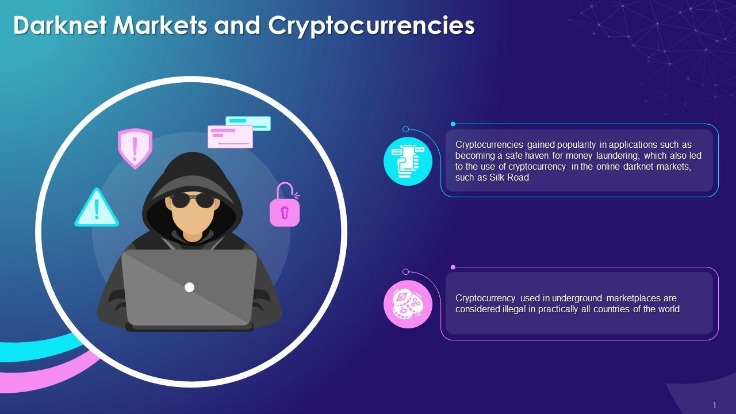
The landscape of illicit cryptocurrency use on darknet markets has undergone a significant evolution. While Bitcoin was once the undisputed medium of exchange, its transparent and pseudonymous nature became a liability for actors seeking to obscure their financial trails. This vulnerability prompted a migration towards privacy-centric cryptocurrencies, with Monero emerging as a primary alternative. Its cryptographic design ensures that transaction details, including sender, receiver, and amount, are concealed by default, offering a level of privacy that Bitcoin cannot natively provide.
This shift towards enhanced anonymity has been mirrored by another, more recent trend: the rise of stablecoins in illicit payments. Tether’s USDT, in particular, has been increasingly observed on darknet platforms. The appeal of stablecoins lies in their price stability, pegged to fiat currencies like the U.S. dollar, which eliminates the volatility risk associated with Monero or Bitcoin during a transaction. This stability, however, does not equate to perfect anonymity, as transactions on networks like Ethereum or Tron can often be traced, creating a complex web of financial activity for investigators to unravel.
The broader context, therefore, reveals a dual-track system developing within the darknet economy. On one hand, Monero continues to be the asset of choice for transactions demanding the highest possible degree of obfuscation. On the other, stablecoins are gaining traction for their utility in settling payments without exposure to market swings. This diversification in payment methods demonstrates the adaptability of illicit markets and presents a multifaceted challenge to global regulatory and law enforcement efforts aiming to disrupt their financial infrastructure.